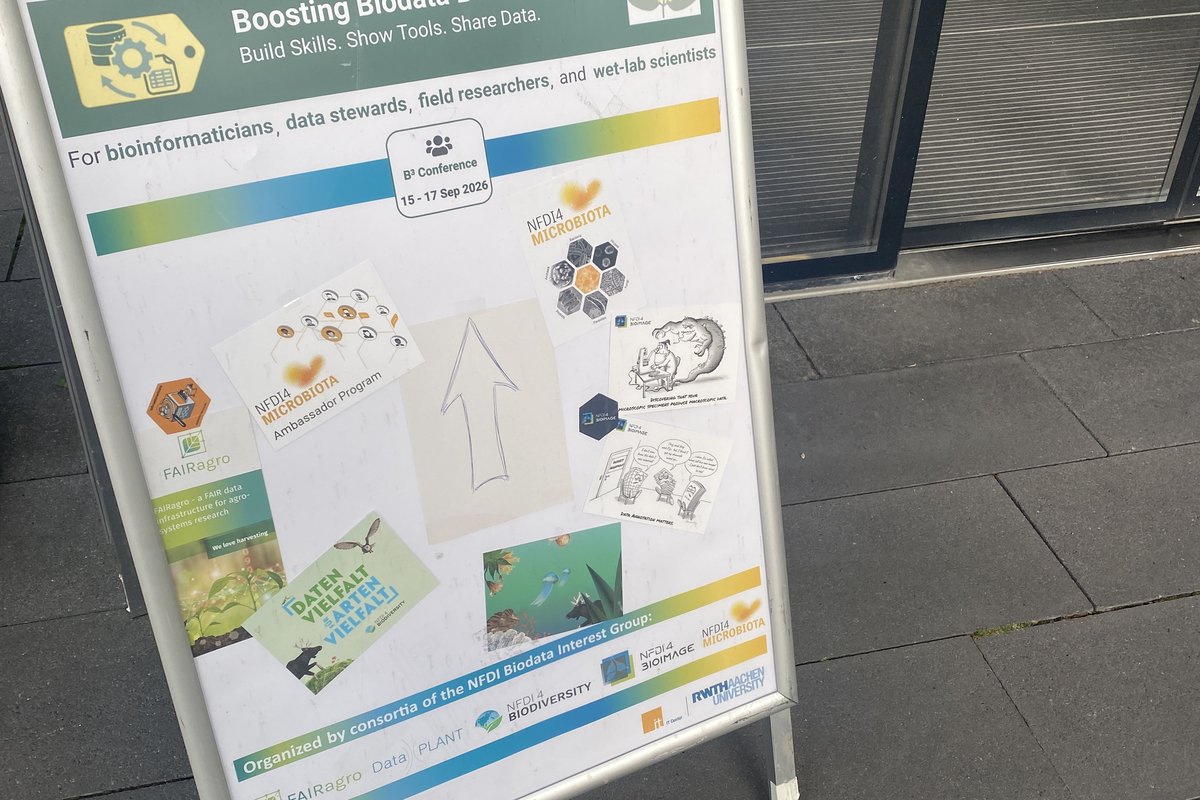
This year’s NFDI4Microbiota annual conference was organized together with NFDI4Biodiversity, DataPLANT and NFDI4BioImage in Aachen, Germany. The aptly named Boosting Biodata Bootcamp was packed with workshops, presentations, keynotes and a services marketplace to provide ample networking opportunities within and beyond the consortia. Around 100 developers, data stewards and researchers attended the conference.
Meet the Developers at the Service Marketplace
The Service Marketplace allowed potential users to experience a wide variety of available data management services, to ask direct questions and to get into contact with the developers. Services represented ranged from picture annotation (Biigle), research data management platforms (BEXIS2, Aruna), to workflow management (CloWM) and more. GFBIo was also available with a booth, providing expert advice for our many services.
Workshops and Posters
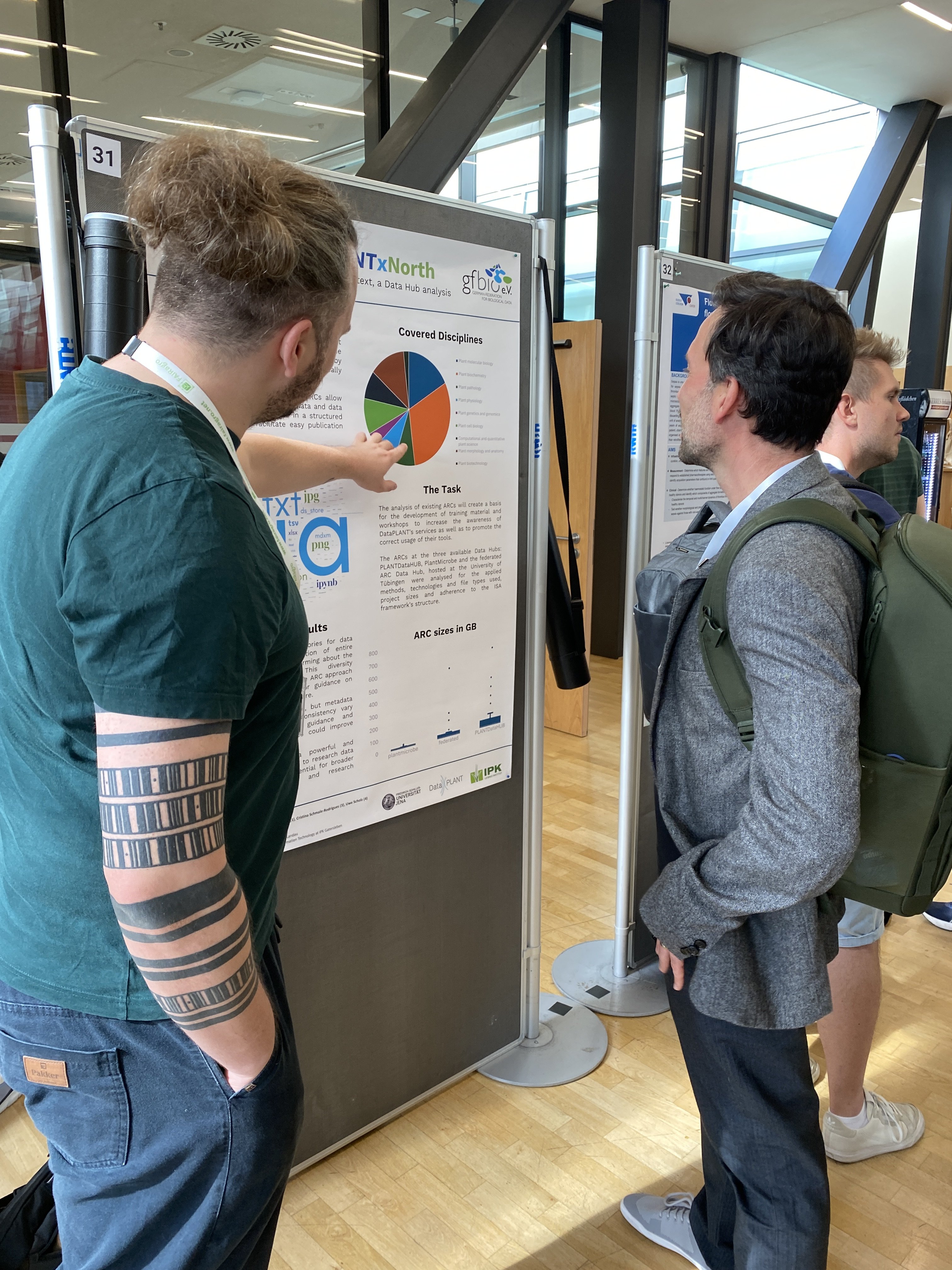
GFBio was also present to deliver workshops and a project poster. In “Data Management Planning in biodata and life sciences: Sharing is caring”, co-organized by GFBio Data Steward Jimena Linares, attendees were able to learn about Data Management Plans (DMP), their importance in the creation of FAIR data, and use cases followed by a hands-on session to work with a DMP tool of their preference. Judith Engel taught participants to identify problems in real-world data curation challenges in the workshop “Pitfalls of data sets - data curation workshop for ecological and species occurrence data”, and, finally, Ivaylo Kostadinov in “How to find a place for my data” elaborated on the importance of data publication, how to find an appropriate data repository and how to be acknowledged for the labor that goes into data creation.
The new GFBio project DataPLANTxNorth, a DataPLANT community-call funded research data management opportunity, displayed a poster with preliminary results regarding the plant research discipline represented, the methods and technologies, the data structures, and the repository sizes of the publicly available Annotated Research Contexts (ARCs) published on the openly accessible Data Hubs. The complete results will be published in the near future.